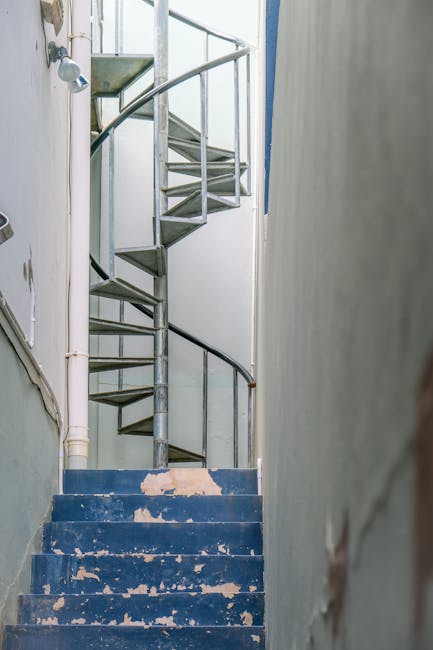
Avoiding damage in narrow Norwood Junction staircases
Narrow staircases are where a simple move can suddenly feel very complicated. One awkward turn, one heavy wardrobe, one scuffed plaster wall, and the whole day changes. If you are avoiding damage in narrow Norwood Junction staircases, the real challenge is not just getting furniture upstairs or down - it is doing it without marking paintwork, cracking corners, or trapping everyone in that "how on earth do we turn this?" moment. Around Norwood Junction, many homes have tight hallways, old stair angles, and those slightly unforgiving turns that look manageable right up until moving day.
This guide walks through the practical side of protecting both property and belongings in tight spaces. You will find clear methods, realistic examples, a step-by-step approach, and the sort of small details that tend to make the difference between a smooth move and a messy one. Truth be told, the stairs are often the hardest part, not the loading bay or the van.
Table of Contents
- Why Avoiding damage in narrow Norwood Junction staircases Matters
- How Avoiding damage in narrow Norwood Junction staircases Works
- Key Benefits and Practical Advantages
- Who This Is For and When It Makes Sense
- Step-by-Step Guidance
- Expert Tips for Better Results
- Common Mistakes to Avoid
- Tools, Resources and Recommendations
- Law, Compliance, Standards, or Best Practice
- Options, Methods, or Comparison Table
- Case Study or Real-World Example
- Practical Checklist
- Conclusion
- Frequently Asked Questions
Why Avoiding damage in narrow Norwood Junction staircases Matters
Stair damage is one of those move-day problems that starts small and then seems to grow legs. A chipped banister, a dented wall, a torn carpet edge, a scratched door frame - each one can be expensive, annoying, and honestly a bit deflating. In a narrow Norwood Junction staircase, the margin for error is tiny. That matters because the staircase usually carries the first visible signs of a rushed move.
It is not only about appearance either. Narrow stairs increase the risk of injuries, dropped items, and damaged furniture. A sofa that catches on a landing can twist unexpectedly. A fridge can shift weight at the wrong angle. Even a box that seems harmless can take a nasty turn if the person carrying it cannot see the next step clearly.
There is also the stress factor. Once one item scrapes the wall, people start second-guessing every move. The atmosphere changes. You feel it in the room, especially when several people are waiting on a landing with nowhere to stand. Avoiding damage keeps momentum steady, which is half the battle in a tight property. If you have ever tried to pivot a headboard while somebody else is still on the stairs, you will know the feeling.
For local home and business moves, this is where preparation becomes worth more than muscle. In practical terms, the right approach can protect the property, keep the move on schedule, and reduce the chance of needing touch-up repairs later. That is a very ordinary benefit, but an important one.
When a move also involves packed corridors, old plasterwork, or awkward L-shaped staircases, planning matters even more. You can reduce risk by treating the staircase as a measured route rather than a simple passage. A lot of people skip that part. Then they pay for it in scuffed skirting boards. Not ideal.
How Avoiding damage in narrow Norwood Junction staircases Works
The basic idea is simple: before anything is moved, you figure out how the item, the people carrying it, and the staircase will interact. In reality, this means checking measurements, planning the angle of movement, protecting contact points, and choosing the right lifting method.
In a narrow staircase, movement is rarely straight. Most items need to be tilted, rotated, or carried at a different orientation from the one you would use in a wider home. That is why "just get it round the corner" is rarely a useful strategy. You need a plan for the corner itself.
Protection usually works in layers:
- Measure the item and the staircase so there are no surprises at the landing.
- Remove hazards such as loose mats, picture frames, clutter, and door stops.
- Protect surfaces with blankets, covers, edge guards, or temporary floor protection where needed.
- Assign roles so the person at the front, the rear, and the spotter each know what they are doing.
- Move slowly and communicate clearly, especially on turns and when lowering weight.
The process sounds obvious, but in practice the difference between "obvious" and "done properly" is huge. One person saying "up a bit" and another hearing "down a bit" can make a mess of a whole staircase. Clear calls matter. So does patience.
For awkward furniture, the method may involve partial disassembly. This is often the safest route because it reduces bulk and gives you better control. Bed frames, table legs, shelving units, and some sofas can usually be taken apart enough to make the move easier. If that is not possible, wrapping and angle management become even more important.
In some homes, the staircase itself is the main obstacle. In others, the challenge is the entry point from the front door into the hallway. The best movers treat the route as one connected path: door, hall, stairwell, landing, turn, and final room. Once you think of it that way, the risks become a lot easier to spot.
Key Benefits and Practical Advantages
There are obvious benefits to avoiding damage, but there are also a few that people only notice once the move is finished.
- Less repair cost later - fewer touch-ups for walls, bannisters, paint, and plaster.
- Lower risk of furniture damage - corners, veneer, upholstery, and glass stay safer.
- Better pace on the day - fewer pauses caused by a stuck item or a risky angle.
- Reduced stress - everyone feels more confident when the route is protected and planned.
- Improved safety - fewer slips, strain injuries, and awkward carrying positions.
- Cleaner handover - especially important if you are leaving a rented property or moving into a managed building.
There is also a softer benefit: professionalism. If you are moving into a new place or helping a client move, careful handling creates trust very quickly. People notice when stair edges are protected and when the team pauses to measure before lifting. It looks calm. It feels calm. And that really does matter.
If you are comparing support options, services like home moves and man and van assistance can be especially useful when the staircase is the toughest part of the property. For heavier items, a larger vehicle or more structured setup may suit the job better, which is where a moving truck can sometimes make the overall move easier to manage. A careful service setup matters more than people think.
Who This Is For and When It Makes Sense
This approach is useful for a wide range of people, not just those moving from a classic narrow-terrace house. If the stairs are tight, steep, curved, split-level, or just awkwardly shaped, the same principles apply.
You will benefit most if you are:
- moving house in or around Norwood Junction with older-style staircases
- carrying larger furniture such as sofas, wardrobes, beds, or appliances
- trying to protect freshly painted walls or newly renovated interiors
- leaving a rental property where deposit deductions are a concern
- moving office items through tight stairwells in a converted building
- handling fragile or high-value items that cannot afford a scrape
It also makes sense when there are time pressures. On busy move days, people tend to rush the last few items because they are tired and want to be finished. That is exactly when a narrow staircase turns into trouble. A careful, well-organised approach helps you resist that final bit of "let's just get it done" energy. We have all been there.
For offices and commercial spaces, the risks can be even more pronounced because furniture may be bulkier, and shared stairwells may need extra protection. In those cases, commercial planning and route checking are just as important as the lift itself. If you are moving business equipment, commercial moves or office relocation services may be the more suitable route.
If the staircase is tight and the item is not worth risking, furniture removal support can help. Sometimes the most efficient move is not the hardest push - it is the one that respects the space.
Step-by-Step Guidance
Here is a practical way to handle narrow staircases without making them the enemy of the whole move.
1. Measure everything before the lift starts
Check the width of the staircase, the height of the ceiling at the turn, the landing space, and the item dimensions. Include awkward bits like arms, handles, and feet. A sofa that "fits on paper" can still catch on a handrail if the turn is tight. Measure the route, not just the object.
2. Clear the staircase completely
Remove shoes, mats, loose cables, wall decor, and anything resting on the steps. If the staircase has a narrow top landing, clear that too. You want room to pivot, pause, and reset if needed. A tiny bit of clutter can make a small staircase feel much smaller. Strange but true.
3. Protect surfaces before moving anything heavy
Use padded blankets, corner guards, and floor protection at the most exposed points. Focus on where the object is most likely to touch: the inside edge of turns, banister corners, wall returns, and the edge of each landing. Even basic protection can stop a careless scuff becoming a repair job.
4. Decide whether the item should be dismantled
Take apart beds, remove table legs, and detach shelves where safe to do so. Dismantling does not always mean full disassembly; sometimes reducing the width by a few inches is enough. That small amount can be the difference between an awkward drag and a clean carry.
5. Plan who leads and who follows
One person should guide the front of the item. Another should manage the rear. If the object is heavy or awkward, a third person can watch the route, call out corners, and spot contact points. This is especially helpful on older staircases where the wall lines are not quite straight.
6. Use controlled movements, not quick lifts
Lift in a steady motion and pause at each turn. If the item starts to twist, stop. Do not force the angle. Adjust, tilt, and try again. Rushing is where damage happens. Also, where people strain their backs. So yes, slow is often faster in the end.
7. Reassess at each landing
The stairwell can look manageable from the bottom but become far tighter halfway up. Recheck the turning room at each landing and decide whether the item needs to be rotated, lowered, or carried vertically for a section. Small reassessments save big headaches.
8. Finish with a quick inspection
Once the item is through, look back at walls, skirting boards, handrails, and floor edges. Catching a fresh scuff straight away is useful because it tells you what to watch next time. It is a simple habit, but a good one.
Expert Tips for Better Results
Some of the best results come from the little things people overlook.
- Work with daylight where possible. Natural light helps you spot tight clearances and wall contact points more easily.
- Use visual markers. A strip of low-tack protection at the sharpest corner can make the turning point easier to judge.
- Protect the corners first. Most staircase damage happens on the edges, not the flat wall sections.
- Keep communication short. "Hold," "turn," "pause," and "down" are better than long explanations mid-lift.
- Wear sensible footwear. It sounds basic, but grip matters on stairs, especially if the floor is carpeted or polished.
- Pre-walk the route with the item in mind. Stand at each turn and imagine the movement before it happens. A bit odd perhaps, but it works.
One practical observation: a small team that works calmly often beats a larger group that keeps talking over one another. Too many voices can make a tight staircase feel chaotic very quickly. Keep it simple.
If packing is part of the move, strong boxes and sensible weight distribution matter too. A heavy box on a narrow stairwell becomes much harder to control than the same box on the hallway floor. If you want to reduce that risk from the start, packing and unpacking services can help create more manageable loads.
And if you are shifting a single awkward item rather than a full household, a lighter setup like man with van support can sometimes be the neatest answer. Not every move needs a full-sized operation. Sometimes it just needs the right pair of hands.
Common Mistakes to Avoid
Most staircase damage does not happen because people are careless on purpose. It usually happens because they underestimate the route. Here are the mistakes that crop up again and again.
- Skipping measurements and assuming the item will "just fit".
- Forcing the turn instead of stopping to reset the angle.
- Leaving the staircase unprotected, especially at handrail corners and landing edges.
- Carrying too much at once, which makes visibility and balance worse.
- Ignoring the ceiling height on the landing, which can catch taller furniture unexpectedly.
- Using the wrong number of people for the item size and staircase shape.
- Rushing because the van is waiting, which is a classic move-day trap.
There is one mistake people rarely mention: forgetting that the person at the front cannot always see what the person at the back can see. That is why a third spotter can be so helpful. A little extra awareness goes a long way in tight spaces.
For larger or more fragile items, some customers choose furniture collection support first so the route can be planned around the item itself, not the other way around. If you need help shifting bulky pieces safely, furniture pick-up can be a useful service to consider.
Tools, Resources and Recommendations
You do not need a warehouse of specialist gear to protect a narrow staircase, but the right basics make a real difference.
| Tool or Resource | What It Helps With | Best Use |
|---|---|---|
| Furniture blankets | Protecting painted walls, handrails, and furniture corners | Wrapping bulky items and padding narrow turns |
| Corner protectors | Reducing impact at sharp staircase edges | Landings and outer wall corners |
| Floor protection | Preventing scratches and scuffs on steps and hall floors | High-traffic routes on move day |
| Straps or harnesses | Improving control for heavier items | Appliances, wardrobes, and large boxes |
| Tools for dismantling | Making large items smaller and easier to manoeuvre | Beds, tables, shelving, and modular furniture |
As a practical recommendation, keep a small "staircase kit" ready before the move starts: tape, blankets, gloves, a torch if the landing is dim, and a couple of sturdy boxes for loose fixings. You really do not want to be hunting for screws halfway through a lift. Been there, regretted that.
For larger transport needs, vehicle choice matters too. A compact job may suit a simple man and van arrangement, while a fuller household relocation may justify a bigger vehicle such as removal truck hire. The point is not to choose the biggest option. It is to choose the one that matches the route, the load, and the staircase.
If you want to know more about the people behind the service, it can also be useful to look at the company background on about us. And if you are comparing arrangements or need to clarify something before moving day, the most direct next step is to contact us.
Law, Compliance, Standards, or Best Practice
For a topic like this, the most relevant guidance is usually not a single rule but a mix of sensible UK moving practice, landlord expectations, building access etiquette, and general safety obligations. If you are moving in a shared building or rented property, it is wise to protect common areas and avoid causing avoidable damage. That is simply good practice, and in many situations it helps prevent disputes later.
Where lifting is involved, teams should follow basic manual handling best practice. In plain English: do not lift beyond your ability, keep loads balanced, communicate clearly, and use help when an item is too awkward for one person. This is not about being cautious for the sake of it. It is about keeping people safe and reducing the chance of back strain, slips, or dropped furniture.
In managed blocks or converted properties, there may also be access rules about using lifts, protecting communal walls, or booking move windows. Those details vary from place to place, so it is sensible to check them in advance rather than assume. Better to spend five minutes asking than fifty minutes apologising later. A fair trade, really.
If you are a tenant, avoid damage because it can affect your deposit or lead to repair discussions. If you are a homeowner, it can still save time and money after the move. In either case, careful handling is the standard worth aiming for.
Options, Methods, or Comparison Table
Different staircase situations call for different approaches. Here is a straightforward comparison to help you think it through.
| Method | Best For | Advantages | Limitations |
|---|---|---|---|
| Careful carry with protection | Moderately awkward furniture and short stair runs | Fast, cost-effective, low disruption | Still depends on clear measurements and good teamwork |
| Partial dismantling | Large furniture with removable parts | Reduces width and weight, improves control | Requires time and tools, not always possible |
| Two-person carry with spotter | Heavy or fragile items in tight stairwells | Better communication and route awareness | Needs coordination and enough landing room |
| Full-service moving support | Multiple bulky items or more complex moves | Better planning, easier handling, fewer surprises | May be more involved than a small independent move |
There is no single best method for every property. A narrow staircase with a sharp turn may be better served by dismantling and a two-person carry, while a straight but steep stairway may simply need strong protection and careful pacing. The "right" answer is the one that reduces handling risk before the item reaches the first step.
For some households, a structured full-move approach is the most comfortable route. That is where house removalists or home moves support can take pressure off the staircase problem entirely. It is not about overcomplicating the job. It is about making the awkward bit manageable.
Case Study or Real-World Example
Picture a typical Norwood Junction terrace: narrow hallway, turned staircase, a landing that feels just wide enough for two people if nobody breathes too deeply. A family is moving a double wardrobe upstairs and a bed frame downstairs at the same time. Sounds simple. It never is.
Instead of trying to push the wardrobe in one piece, the team checks measurements first and removes the doors and base where possible. The staircase corners are protected with blankets, and one person stays at the landing to watch the wall clearance. The bed frame is taken apart before it reaches the stairs, which saves a lot of frustration later. The key moment comes on the turn: the wardrobe is tilted slightly, paused, and rotated slowly rather than shoved through. No scraping. No harsh thud. Just a careful, awkward half-minute that saves the wall.
That is usually how it goes in real life. Most staircase damage is not caused by one dramatic accident. It is caused by a small series of rushed decisions. One too-hard push. One missed corner. One person saying "it'll be fine" while the item clearly disagrees.
At the end of the move, the property is still tidy, the furniture is intact, and nobody has to spend the evening checking paintwork with a torch. That last bit matters more than people admit.
Practical Checklist
Use this before the first heavy item reaches the stairs.
- Measure the staircase, landing, and item dimensions
- Clear the hall, steps, and turn points
- Protect walls, corners, and floor edges
- Check whether the item can be dismantled
- Assign a lead mover, rear support, and spotter if needed
- Agree on short communication words before lifting
- Wear shoes with good grip
- Move slowly at turns and landings
- Stop if the angle feels wrong
- Inspect for marks once the item is through
Expert summary: if the staircase is tight, do the thinking before the lifting. Measure early, protect early, and keep the movement controlled. That is the simplest way to reduce damage, reduce stress, and keep the day moving. Not glamorous, but it works.
Conclusion
Get a free quote today and see how much you can save.
A narrow staircase in Norwood Junction does not have to mean a stressful move. With the right measurements, sensible protection, clear communication, and a willingness to slow down at the awkward bits, you can keep both the property and the furniture in good shape. That is the real win here. Not speed for its own sake, but a move that finishes cleanly and calmly.
And honestly, that calm feeling at the end of a long day? Worth a lot.
Frequently Asked Questions
How do you stop walls getting scratched in a narrow staircase?
Protect the corners and the main contact points before you start. Furniture blankets, corner guards, and careful spotting during turns are usually the biggest help. The tighter the staircase, the more important it is to slow down at the landing and avoid forcing the item through.
Should furniture be dismantled before going up narrow stairs?
Often, yes. Removing legs, doors, shelves, or other removable parts can make a large item much easier to carry and control. Even a small reduction in width can be enough to prevent damage on a tight turn.
What is the biggest mistake people make on narrow staircases?
Rushing. Most damage happens when people assume the item will fit if they push a little harder. Narrow stairs usually reward patience, not force.
Do I need special equipment to move furniture safely?
Not always, but basic protection helps a lot. Furniture blankets, floor covers, straps, gloves, and a torch for darker landings can make the job safer and neater.
Is a man and van service enough for a staircase-heavy move?
It can be, depending on the size of the load and how awkward the staircase is. For smaller or single-item moves, man and van support may be perfectly suitable. For larger household moves, you may need something more structured.
How do I know if the staircase is too narrow for my furniture?
Measure the furniture at its widest point and compare it with the route, including turns and landings. If the item needs to be angled sharply and still looks close to the wall or ceiling, the risk is high and dismantling or alternative handling may be safer.
Can packing style affect staircase damage?
Yes. Heavy, unstable, or overfilled boxes are harder to carry and more likely to slip or bump walls. Good packing and unpacking services can help make loads more manageable and reduce awkward handling.
What should I protect first in an older Norwood Junction property?
Focus on the sharp corners, banister ends, wall edges on the turns, and the landing area. Older homes often have more delicate plaster or tighter geometry, so the contact points matter more than people expect.
How many people should carry furniture on stairs?
That depends on the item and the staircase shape. Two people may be enough for many items, but a third person as a spotter can be very helpful in narrow or twisting stairwells.
What if the item gets stuck halfway up the stairs?
Stop. Do not force it. Lower or rotate the item slowly, then reassess the angle and the available space. Getting stuck is usually a sign the planned route or carry method needs adjusting.
Are there any rules about damaging communal areas during a move?
Rules vary by building, but in shared properties it is sensible to protect communal areas and check any access arrangements in advance. If you are moving in a managed building, it is better to confirm the expectations early rather than deal with avoidable repairs later.
When should I choose full removal support instead of doing it myself?
If the staircase is especially tight, the furniture is heavy or fragile, or the move includes several large items, full removal support can be the safer and less stressful option. It is often the better choice when the staircase is the main obstacle, not the van or the distance.
A careful move is often a quiet one. No drama, no scraped plaster, just the sense that everything was handled with a bit of thought. That is usually enough, and sometimes more than enough.