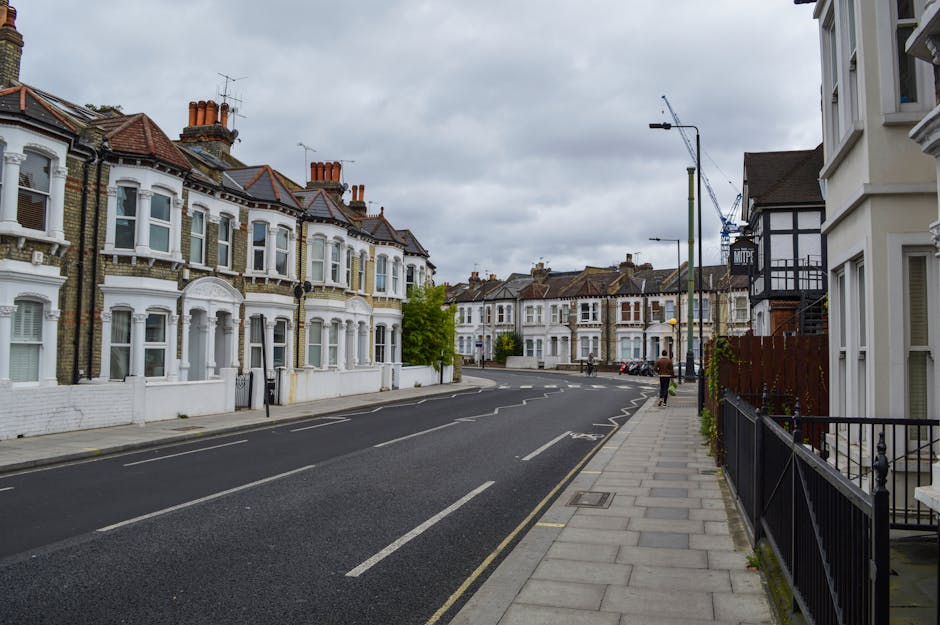
How we moved a Victorian terrace in Selhurst with zero damage
Moving a Victorian terrace sounds simple on paper. In real life, it can mean narrow hallways, steep stairs, delicate plaster, old floorboards, awkward parking, and a lot of things that can go wrong if the job is rushed. That is exactly why people ask how we moved a Victorian terrace in Selhurst with zero damage. Not "almost no damage". Zero damage. No chipped banisters, no scuffed walls, no cracked picture rails, no dented doors. Just a careful, calm move that respected the house as much as the furniture inside it.
In this guide, I'll walk through the full approach: why this kind of move needs special handling, how the process works, what made the difference, and the practical checks that keep everything intact. If you are planning a move in a period property, or you just want to understand what a proper protective move looks like, you are in the right place. Truth be told, the house often matters as much as the contents.
One quick note before we get into it: every Victorian terrace has its own quirks. Some have tighter stair turns, some have deeper mouldings, some have that one stubborn front step that catches people out every time. So while the principles stay the same, the execution has to be tailored on the day. That is where damage-free moving really starts.
Contents
- Why moving a Victorian terrace in Selhurst without damage matters
- How a zero-damage move works in practice
- Key benefits and practical advantages
- Who this approach is for
- Step-by-step guidance
- Expert tips for better results
- Common mistakes to avoid
- Tools, resources and recommendations
- Law, compliance, standards, and best practice
- Options and method comparison
- Case study and real-world example
- Practical checklist
- Conclusion
- Frequently asked questions
Why How we moved a Victorian terrace in Selhurst with zero damage Matters
Victorian terraces are beautiful, but they are not forgiving. Many have narrow access points, original joinery, older plaster, and staircases that seem designed by someone who disliked furniture. In Selhurst, that can be made trickier by roadside parking, close neighbours, and the usual London reality of limited space outside the front door. So the question is not just how to move things out. It is how to move them out without scraping the fabric of the house on the way.
Damage during a house move is often small at first glance. A scuff on a wall. A chipped skirting board. A mark on a painted bannister. But those little things add up, and in a period property they can be expensive and irritating to put right. Old homes also tend to show damage more clearly. Fresh paint on older walls is a bit like wet ink on white paper; you notice everything.
There is also a trust factor. When someone asks a removal team to work in a Victorian terrace, they are not only handing over possessions. They are trusting the crew to handle a home with care. That means slow movement, proper protection, clear communication, and a plan that fits the building rather than forcing the building to fit the move. It sounds obvious, but let's face it, obvious is often what gets missed when people are in a rush.
For homeowners, landlords, and anyone renovating a period property, this matters because damage-free moving protects both value and peace of mind. It keeps the day calmer. It avoids surprise repair bills. And it gives you one less thing to worry about on a day that already has enough moving parts, pun intended.
How How we moved a Victorian terrace in Selhurst with zero damage Works
The core idea is simple: protect the property before a single heavy item moves, then control every touchpoint between the item and the house. That means planning the route, measuring awkward items, protecting floors and walls, and assigning the right people to the right tasks. The move itself becomes less about force and more about choreography.
We start with an access check. That includes front path width, door swing, hallway clearance, staircase turns, and any tight bends between rooms. Victorian terraces often have one or two awkward points that decide the whole moving strategy. If a sofa will not angle through the stairwell safely, the sensible answer is not to "give it a go and hope". It is to remove legs, rotate the item correctly, or use an alternative route.
Next comes protection. High-traffic surfaces are covered before heavy lifting begins. Think floor runners, corner guards, door protection, and padded wraps where needed. The goal is to create a buffer between the house and the movement. You are not trying to make the home invisible. You are trying to make it resilient for a few concentrated hours.
Then there is the handling itself. In a good move, the team works in a controlled sequence: one person leads, one supports, and communication stays constant. The person at the front calls the corners, the person at the back watches the tail end, and nobody rushes the turn just because the van is waiting outside. That is where damage usually happens - not on the straight line, but on the corner everyone thought would be fine.
Finally, there is the landing and loading phase. Fragile items are not thrown into the van and hoped for. They are wrapped, stacked with purpose, and secured so they do not shift in transit. It is a system, really. A bit boring to describe, perhaps, but that is often what keeps the expensive drama out of moving day.
Key Benefits and Practical Advantages
A zero-damage approach is not just about aesthetics. It changes the whole feel of the move. The benefits are practical, financial, and emotional - and that last one is easy to underestimate.
- Less repair work: No touch-up painting, filler, or emergency joinery repairs after the move.
- Better protection for period features: Victorian details like skirting, arches, mouldings, and banisters are preserved.
- Lower stress on moving day: A well-protected property tends to run more calmly. People stop tensing up at every doorway.
- Reduced risk to bulky furniture: Careful handling protects both the house and the item being moved.
- Cleaner handover: This matters if you are selling, renting, or handing a property back to a landlord.
- More confidence for repeat moves: Once you know what works, future moves become easier to plan.
There is a subtle advantage too. When the team works carefully, you can usually feel it in the pace of the day. It is slower in the right places, quicker in the safe places. No chaos. No overcompensation. Just steady progress. That is often the difference between a move that feels controlled and one that feels like a furniture-related emergency.
Expert summary: zero damage is rarely about one heroic trick. It is usually the result of ten sensible decisions made before and during the move. Good protection, good route planning, and good communication do most of the heavy lifting - literally.
Who This Is For and When It Makes Sense
This approach makes sense for anyone moving in or out of a Victorian terrace, especially if the property has original features or tight circulation space. It is particularly useful for homeowners who care about presentation, landlords trying to avoid avoidable wear, and families moving with larger furniture that does not exactly love narrow staircases.
It also makes sense in these situations:
- Period properties with retained features such as coving, panelling, or original bannisters
- Homes with recently decorated interiors where marks would be especially frustrating
- Properties with difficult access or shared front approaches
- Moves involving bulky items like wardrobes, beds, sofas, or bookcases
- Tenanted properties where the condition of the house matters at handover
- Renovation moves where new finishes need to stay untouched
If you are moving out of a modern flat with wide hallways and lift access, some of this may feel over the top. But in a Victorian terrace, it is just sensible. The building itself sets the terms. Better to respect that than fight it.
Step-by-Step Guidance
Here is the practical flow we use when moving a Victorian terrace carefully. Not every job needs every step in the same way, but this is the backbone of a damage-free move.
- Survey the layout. Measure the tight spots, look at stair turns, check door widths, and identify fragile surfaces before anything is moved.
- Decide what must be protected. Floors, corners, banisters, door frames, and any freshly painted sections should be prioritised first.
- Prepare the items. Remove loose shelves, wrap delicate edges, tape doors shut on cabinets, and dismantle oversized furniture where possible.
- Create a safe route. Keep the path clear from room to van. Shoes, mats, toys, and random clutter - all gone. That tiny step saves time later.
- Install protective materials. Use floor runners, quilted covers, corner guards, and wrapping where the route is tight.
- Assign roles. One person leads the item, one supports, and one watches the route or loading area. Three sets of eyes are better than one in a rush.
- Move slowly through pinch points. Corners, stairs, and doorframes are where damage usually happens, so take them at a measured pace.
- Load the van strategically. Heavy items first, delicate items secured separately, and no wobbling stacks. If something can shift, it probably will.
- Do a final walk-through. Check floors, walls, and frames before leaving. Catching a scuff early is better than discovering it after the van has gone.
A small but useful detail: the last ten minutes often matter most. Once the heavy pieces are out, people relax. That is exactly when corners get clipped and doorframes get nicked. Funny how that works, isn't it?
Expert Tips for Better Results
Here are the bits that tend to make the biggest difference in real homes. They are simple, but they are the sort of simple that saves you from a headache later.
1. Protect before lifting, not after
It sounds obvious, but it is worth saying. Once the first piece is halfway through the hallway, it is already too late to protect the floor properly. Set the route first. Then move.
2. Measure the awkward furniture, not just the rooms
People often measure doorways and forget the sofa's diagonal depth, the bedframe's widest point, or the angle needed on a stair turn. That is where trouble starts. A tape measure can save a lot of swearing. Mild swearing, ideally.
3. Use the right wrapping for the right item
Soft blankets are fine for many items, but sharper edges, polished surfaces, and glass need better protection. A one-size-fits-all approach is rarely the best approach in a period house.
4. Keep communication short and clear
On moving day, too much talking can be as unhelpful as too little. Clear calls like "pause", "lift", "turn", and "down" reduce confusion. The best crews sound almost boringly calm.
5. Watch the first and last step
The threshold into the house, and the final step down to the van, are classic snag points. If you get those right, the rest of the route usually feels easier.
One more thing: if the move feels too tight, stop and rethink. There is no prize for brute force. None. A slower, cleaner angle almost always beats a rushed lift.
Common Mistakes to Avoid
Most moving damage is predictable. That is the frustrating part. The good news is that predictable mistakes are also avoidable.
- Skipping the survey: Guessing your way through a Victorian terrace usually ends badly.
- Not protecting floors early enough: Even a short trip with a heavy item can leave marks.
- Forcing oversized furniture through tight routes: If it does not fit safely, change the method.
- Ignoring fragile period features: Skirting, mouldings, and bannisters need more care than plain modern finishes.
- Overloading one person: Heavy items need coordination, not heroics.
- Rushing the final unload: Fatigue is a real risk by the end of the day.
- Assuming the van load is secure enough: Unsecured items can shift and damage themselves or each other.
There is also a quieter mistake: underestimating the emotional side of the day. People get tense when they love the property. Fair enough. But that tension can make everyone move too quickly. A calm pace usually protects both the house and your nerves.
Tools, Resources and Recommendations
A zero-damage move depends on the right kit, but not in an overcomplicated way. You do not need a warehouse full of specialist gear. You do need sensible protection that suits the house and the furniture.
| Tool or resource | What it helps with | Why it matters in a Victorian terrace |
|---|---|---|
| Floor runners | Protecting hallways and landings | Older floors and fresh finishes show marks easily |
| Quilted furniture covers | Shielding sofas, cabinets, and tables | Reduces knocks against walls and doorframes |
| Corner guards | Protecting sharp edges and corners | Useful around tight turns and stairwells |
| Removal straps | Controlled lifting and balance | Helps with heavy items on stairs or narrow routes |
| Sturdy tape and wraps | Securing loose parts | Prevents drawers, doors, and shelves shifting mid-move |
| Measuring tape | Checking clearances | Stops guesswork at doors, turns, and landings |
In practice, the best resource is still preparation. Good tools help, but a clear plan helps more. You can have the right cover, the right straps, the right gloves, and still create a problem if nobody has thought through the turning angle on the stairs.
If you are arranging your own move, use a simple pre-move inventory and label fragile items clearly. If you are working with a professional team, ask how they protect floors and period features. A good answer usually comes with specifics, not vague reassurance.
Law, Compliance, Standards, or Best Practice
For a domestic move like this, there is not usually a complicated legal process specific to the house itself, but there are still sensible UK best-practice expectations to keep in mind. Careful handling, safe lifting, and proper transport planning matter. If a mover is working professionally, they should also be thinking about safe working methods, injury prevention, and liability if something goes wrong.
In plain English, that means the team should not improvise with unsafe lifting, block shared access, or damage communal areas without due care. If parking or loading affects the street outside, it is wise to check local restrictions in advance rather than discovering them the hard way. London streets have a knack for turning "just for a minute" into a problem.
For homeowners, the practical takeaway is simple: ask how the move will be protected and managed. Good practice is visible. You can usually spot it in the planning, the equipment, the pace, and the way the crew communicates. If a provider cannot explain their approach clearly, that is worth pausing over.
Insurance is another consideration. You do not need to become an expert in policy wording, but it is sensible to understand what level of cover applies and what is expected from both sides. That is not glamorous. It is just prudent.
Options and Method Comparison
Not every move is handled the same way. Here is a useful comparison of the common approaches people consider for period properties.
| Method | Best for | Pros | Trade-offs |
|---|---|---|---|
| Careful self-move | Small loads, simple furniture, confident movers | Lower immediate cost, flexible timing | Higher risk of wall, floor, or item damage if the route is tight |
| Basic removal service | Standard domestic moves with moderate access | Less heavy lifting for you, more efficient loading | May not give enough protection for period features unless specified |
| Damage-conscious period-property move | Victorian terraces, tight hallways, valuable finishes | Best protection, calmer process, better route control | Usually needs more planning and attention to detail |
If you are dealing with a terrace in Selhurst, the third option is usually the most sensible. Not because it sounds fancy, but because the building deserves the right method. Period homes are good at exposing shortcuts. They really are.
Case Study or Real-World Example
Here is what this looked like in practice. The property was a Victorian terrace in Selhurst with a narrow front approach, a central hallway, a staircase that turned tightly at the landing, and several items that needed careful handling: a wardrobe, a sofa, a dining table, and boxed household goods. Nothing unusual for a London move, but enough to make rushed handling risky.
The first thing we did was slow the day down on purpose. Not in a frustrating way, just enough to create control. Protective runners went down before the major items moved. Corners were checked. The biggest furniture pieces were assessed before lifting, not halfway through the stairs. And any piece that looked awkward was measured against the route rather than guessed at. That saved us from making one of those classic "it should fit" decisions that goes wrong at the first turn.
One micro moment sticks in my head: the staircase banister had a painted edge that would have picked up a mark instantly if the wardrobe had been swung too sharply. So instead of forcing it, we adjusted the angle, paused for a second, and carried it through with a touch more lift. That second mattered. You could hear the difference in the room, actually - less scrape, less drag, more controlled movement. Small thing, but those are the moments that prevent damage.
By the end of the move, there were no scuffs on the hallway paint, no dents to the banister, and no cracked fittings. The house stayed clean and intact, and the furniture arrived in good condition too. The point is not that the move was miraculous. It was methodical. And that is usually how zero-damage results happen. Not by luck, but by a thousand tiny decisions done properly.
Practical Checklist
Use this as a quick pre-move and moving-day reference. A checklist is boring until it saves you an expensive mistake.
- Measure doorways, stair turns, and landing space
- Identify fragile period features that need protection
- Clear hallways, stairs, and front access before the move
- Lay floor protection before any heavy lifting starts
- Wrap sharp or polished furniture edges
- Remove loose shelves, handles, and detachable parts
- Label fragile boxes clearly
- Assign one person to lead each large item through the house
- Move slowly through tight corners and thresholds
- Secure the load in the van so items cannot shift
- Check walls, floors, and frames at the end of the move
- Keep a small repair kit handy for minor packing or rewrapping tasks
If you can tick off most of those items, you are already ahead of the game. Simple, really. But simple works.
Get a free quote today and see how much you can save.
Conclusion
Moving a Victorian terrace in Selhurst with zero damage is absolutely achievable, but it is never accidental. It comes from planning the route, protecting the property properly, and treating every turn, stair, and doorway with care. The house matters. The furniture matters. And the move itself should be built around both.
If you are preparing for a period-property move, the main lesson is this: slow down in the right places and you will often finish faster overall. That sounds slightly backwards, but anyone who has tried to muscle a sofa around a tight staircase will know exactly what I mean. A careful move is not just safer. It is calmer, cleaner, and far less stressful for everyone involved.
And if there is one thing worth remembering, it is that good moving is often invisible. When it is done well, nothing dramatic happens. The hallway stays neat, the walls stay marked-free, and the day just... works. Which, on moving day, feels pretty brilliant.
Frequently Asked Questions
What makes a Victorian terrace harder to move than a modern house?
Victorian terraces often have tighter hallways, steeper stairs, narrower doors, and more delicate period features. That combination means you need better planning and more careful handling than you would in a newer property.
How do you avoid scratches on walls and banisters during a house move?
Use floor runners, corner protection, and padded wraps before lifting anything large. Slow movement through corners and stair turns matters just as much as the protection itself.
Is it possible to move large furniture through a narrow staircase without damage?
Yes, often it is, but only if the item is measured properly and handled at the right angle. Sometimes furniture needs partial dismantling to pass safely. Forcing it is usually where damage starts.
Do I need special protection for period features like skirting boards and mouldings?
Absolutely. These features can mark easily, especially if the property has older paintwork or soft timber details. Even a small knock can leave a very visible mark.
How long does a careful move in a Victorian terrace usually take?
It depends on the amount of furniture, access, and how much dismantling is needed. A careful move can take longer than a rushed one, but that extra time is often what prevents repair work later.
What are the biggest causes of damage during a house move?
The most common causes are rushing, poor route planning, lack of protection, and forcing items through spaces that are too tight. Most damage is preventable with the right preparation.
Should I measure furniture before moving day?
Yes, definitely. Measure the furniture and the route, including corners, stair turns, and door widths. A few minutes with a tape measure can prevent a lot of trouble.
Can a removal team protect floors in an older terrace?
Yes. Proper floor runners and surface protection are standard best practice for careful domestic moves. They are especially useful in older homes where floors can mark easily.
What if my sofa or wardrobe will not fit through the stairwell?
Then the safest options are usually dismantling the item, changing the route, or using a different handling method. Trying to force it usually creates the very damage you are trying to avoid.
Does a zero-damage move mean nothing can ever go wrong?
No move can promise absolute perfection in every situation, but a zero-damage result means the process was controlled well enough that no damage occurred. It is about care, planning, and execution, not magic.
What should I ask a removal company before booking?
Ask how they protect floors, walls, and period features; how they handle awkward items; and what level of cover they provide. Clear answers are a good sign. Vague answers are not.
Why is Selhurst relevant to this kind of move?
Selhurst has plenty of typical London moving conditions: limited roadside space, close neighbours, and older housing stock in places. That makes careful access planning especially useful for terrace moves.
Moving a home like this can feel a bit daunting at first, but with the right approach, it becomes very manageable. One careful step at a time. That is usually enough.